Learn if CBD tolerance is real, how your body adapts to cannabinoids, and how a CBD reset works in long-term use. Explore scientific insights here.
Full Spectrum vs Isolate CBD
Understanding CBD Extract Types
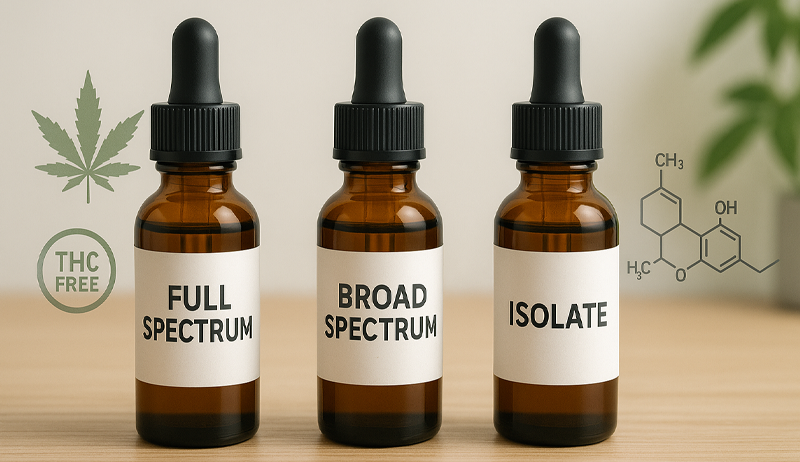
When shopping for CBD products, you will often see terms like full spectrum, broad spectrum, and isolate. Each type refers to a different extraction and refinement process, which impacts the cannabinoid content and effects. This guide explains the differences, effects, legal notes, and who each CBD extract type is best for.
Full Spectrum CBD
Full spectrum CBD contains all naturally occurring cannabinoids from the hemp plant, including trace amounts of THC (below 0.3%), terpenes, and flavonoids. This combination can create the "entourage effect," where cannabinoids and plant compounds work together for enhanced benefits. Full spectrum is best for those seeking a holistic hemp experience and who do not mind trace THC.
Broad Spectrum CBD
Broad spectrum CBD is similar to full spectrum, but with the THC removed. It still contains other cannabinoids and terpenes, supporting the entourage effect without THC exposure. Broad spectrum is ideal for individuals who want multiple cannabinoids' benefits but need to avoid THC for personal, legal, or job-related reasons.
CBD Isolate
CBD isolate is the purest form, containing only cannabidiol (CBD) and no other cannabinoids, terpenes, or flavonoids. It is flavorless and odorless, making it suitable for those sensitive to other hemp compounds or who want to avoid all THC and minor cannabinoids. Isolate is best for people interested in precise dosing and THC-free options.
Entourage Theory Explained
The entourage theory suggests that cannabinoids, terpenes, and other hemp compounds work synergistically, potentially enhancing overall effects. Full and broad spectrum products offer a range of hemp compounds, while isolate delivers only CBD. The best choice depends on your goals and sensitivity to cannabinoids.
Legal Considerations
Legality of CBD extracts depends on local regulations. In the U.S., federally legal CBD products must be derived from hemp and contain less than 0.3% THC. Always check lab results for cannabinoid content and confirm compliance before purchase.
Who Should Choose Each Type?
- Full spectrum: Best for those wanting the full plant profile and not concerned about trace THC.
- Broad spectrum: Suitable for people avoiding THC but wanting other cannabinoids.
- Isolate: Ideal for those sensitive to other cannabinoids or needing THC-free CBD.
For a detailed cannabinoid comparison, visit WS-420.com.
Conclusion
Understanding the differences between full spectrum, broad spectrum, and isolate CBD helps you make informed choices. Always review lab reports and choose the extract type that aligns with your needs and preferences.

Get Comment!